
8:00 a.m. – Breakfast in Erlangen
The day begins with a relaxed breakfast at the hotel or in one of the downtown cafés. A popular choice is the Erlanger Teehaus, a traditional café with a cozy interior and a Zen garden that is open during the summer months. Sweet specialties like fresh waffles offer a delightful start to the day.
10:00 a.m. – Guided tour of the Baroque planned city
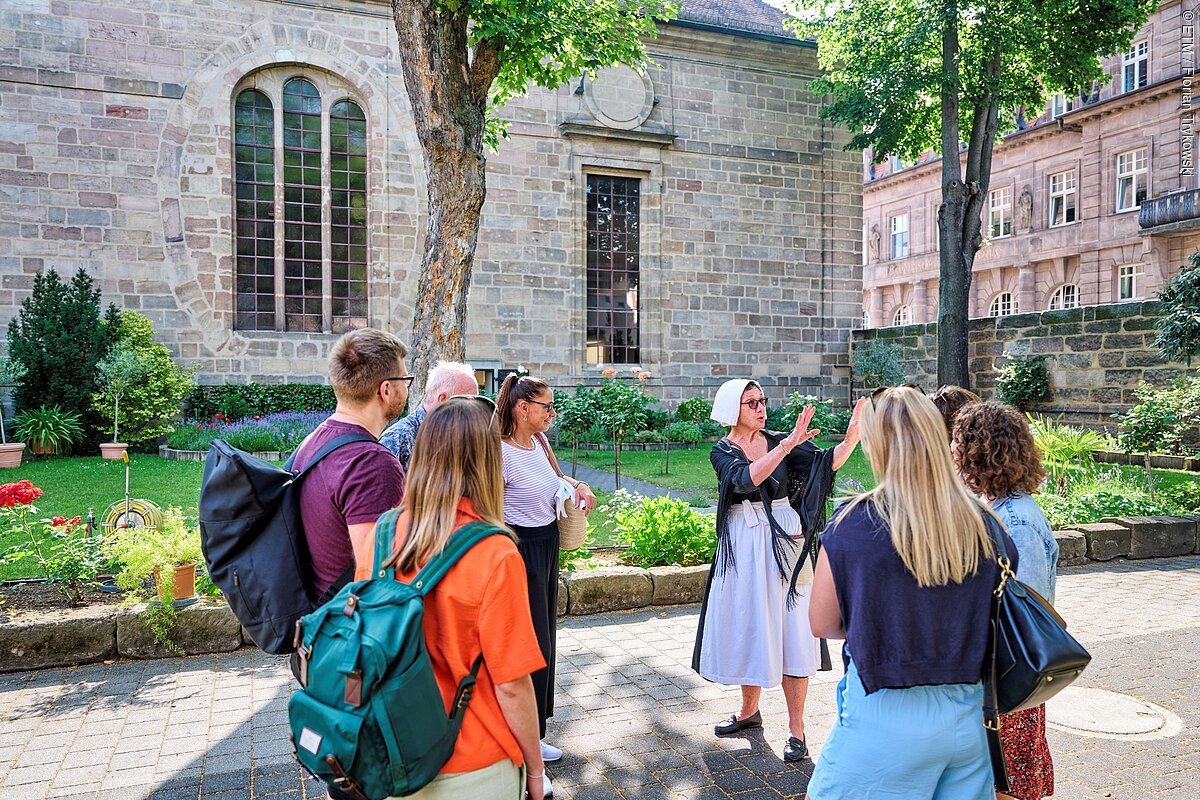
Erlangen is best explored as part of a guided city tour. There are various group tours to choose from, including the classic tour of Erlangen as a Huguenot city or themed adventure tours. The “Bierkutscher Schorsch” tour is particularly popular, combining insights into Erlangen’s beer history with tastings and a visit to historic cellars. Depending on the tour, the guided tours are multilingual and designed for groups of up to 20 people.
12:00 PM – Lunch break at the Erlangen beer cellars
At lunchtime, why not stop by the Erlangen beer cellars, best known for the Bergkirchweih festival? At Entla’s Keller, regional snacks are served with Bergbrezel pretzels and freshly tapped beer. The cellar is open from April through September, and on select days, guided tours of the historic tunnel system are also offered. Alternatively, the Altstädter Schießhaus is a traditional tavern featuring Franconian cuisine, a winter hut, and a bus parking lot.
2:00 p.m. – Heinrich Kirchner Sculpture Garden
A stroll through the Heinrich Kirchner Sculpture Garden combines art and nature. Located on Burgberg, the garden is dedicated to the sculptor Heinrich Kirchner and features numerous sculptures set in a scenic landscape. From here, you can also enjoy views of downtown Erlangen.
3:00 p.m. – Palace Garden and Botanical Garden
The Baroque Palace Garden, featuring an orangery, an equestrian monument, and the Huguenot Fountain, invites you to take a stroll through Erlangen’s historic center. Adjacent to it is the University’s Botanical Garden, which is free to visit. Plants from various climate zones, Franconian landscapes, and the medicinal plant garden highlight Erlangen’s long tradition as a university and medical city.
4:30 p.m. – Culture or Shopping
In the afternoon, Erlangen offers a variety of options for you to explore on your own. Those interested in art and culture can visit the Kunstpalais at the Palais Stutterheim or the City Museum. Alternatively, the downtown area, with its smaller shops along Schiffstraße and Hauptstraße, is perfect for a shopping spree.
6:00 PM – Erlangen Beer and Regional Cuisine
For dinner, Erlangen offers a selection of traditional restaurants. At Steinbach Bräu, Franconian cuisine blends with the history of Erlangen’s brewing tradition. The adjacent beer museum offers insights into the local beer tradition, and tastings are available for groups. Alternatively, the Thalermühle is a great option, easily accessible on foot from the large parking lot.
8:00 p.m. – Theater and Evening Entertainment
The day winds down with a visit to Erlangen’s cultural scene. The Baroque Markgrafentheater is one of the oldest active theaters in southern Germany and offers a diverse program. Additionally, cabaret shows or bars and pubs in the city center are available.
